


"I clearly see the greatest potential for Winterthur in young companies."
Business location Winterthur is undergoing a transformation. While traditional industrial jobs are coming under increasing pressure, new opportunities are emerging in the fields of innovation and entrepreneurship. We spoke with Thomas Schoch, entrepreneur and chairman of the board of directors at Technopark Winterthur, about developments in recent years, the potential of startups, and his vision for Winterthur in 2035.
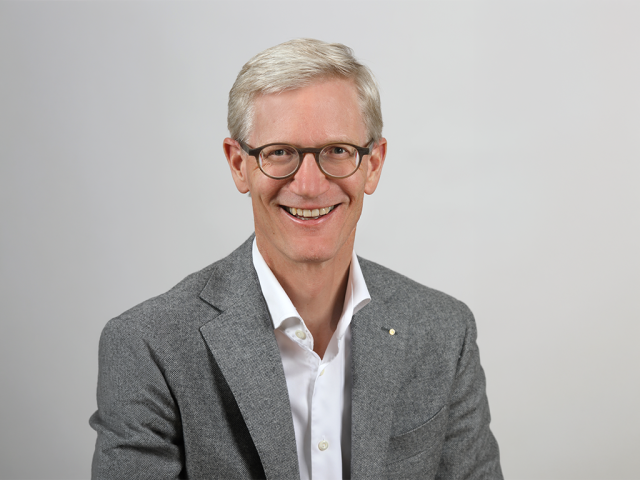
Thomas Schoch, entrepreneur and chairman of the board of directors of Technopark Winterthur.
You’ve known the “ Business location ” in Winterthur for many years from various perspectives. Looking back, what has changed the most in recent years?
Thomas Schoch: The most obviouschange is certainly the deindustrialization of Winterthur, which, as recent examples show, continues to this day. For generations, the city was shaped by industry. Today, employment is growing primarily in the fields of administration, education, and healthcare.
Public discussion tends to focus less on how Winterthur has developed as a hub for innovation—even though a lot is happening here. The ZHAW, which established itself here in 2007, was a stroke of luck for the city. Every year, it produces well-trained professionals, provides impetus through applied research, and often serves as a launching pad for startups. Particularly through collaboration with institutions such as the Technopark and investors from the region, an environment has emerged in which ideas can be turned into companies. In my opinion, this potential is still not being fully recognized.
The city itself has also changed. Winterthur has grown significantly in recent years and, as a result, has become more anonymous. This is particularly evident in the political culture. In the past, solutions were often sought in a pragmatic, bipartisan manner. Today, there is a greater tendency for the greater good to take a back seat to partisan interests. For a Business location that wants to hold its own in a competitive environment, this pragmatic, solution-oriented spirit is of great importance.
Winterthur is currently experiencing both: young companies are growing, while at the same time traditional industrial jobs are coming under pressure. How do you assess this development, and where do you see the greatest opportunities for the city?
Thomas Schoch: I clearly seethe greatest potential for Winterthur in young companies. Economic development efforts should focus even more strongly on this area. On the other hand, I’m somewhat critical of efforts to attract large companies, as the current location factors are particularly challenging for industrial firms. For startups and young companies, the available resources can often be used much more effectively.
Many young companies founded in Winterthur are now successful SMEs and major employers providing numerous jobs. I’m thinking, for example, of Designwerk, coatmaster, SCEWO, and wallee. If we continue to strengthen Winterthur as a hub for innovation, I see great potential for thriving companies that are firmly rooted in the region.
And let’s not forget: whether it’s Sulzer, Rieter, or “Winterthur” Insurance—now known as AXA—all of Winterthur’s well-known companies once started out as startups.
Looking ahead five or ten years: What would need to have emerged in Winterthur for you to say that the “ Business location ” has developed in the right direction?
Thomas Schoch: I’d love to read the following in the 2035 annual report from House of Winterthur: “ economic region Winterthur” can once again look back on an extremely successful year. The number of employees in Winterthur rose by another five percent. This growth was driven primarily by the technology cluster in Neuhegi and on the Vitus Areal.
The Job Creation Award went to the robotics startup X. Founded five years ago at Technopark, the company successfully went public on the Swiss Stock Exchange during the reporting year. This marks the third Winterthur-based startup to go public within five years. House of Winterthur has launched a privately funded grant program for startups. This year, CHF 500,000 was again allocated from this fund to Winterthur-based startups to further strengthen Winterthur’s innovative capacity. The drone hub at the Vitus Areal continues to attract attention far beyond the country’s borders. The associated conferences and seminars ensured very high occupancy rates for seminar and hotel facilities in Winterthur and the surrounding region during the reporting year.
Even more inspiration from Winterthur


